Reiki or Pranic Healing? How to Choose the One for You
Simon Chia
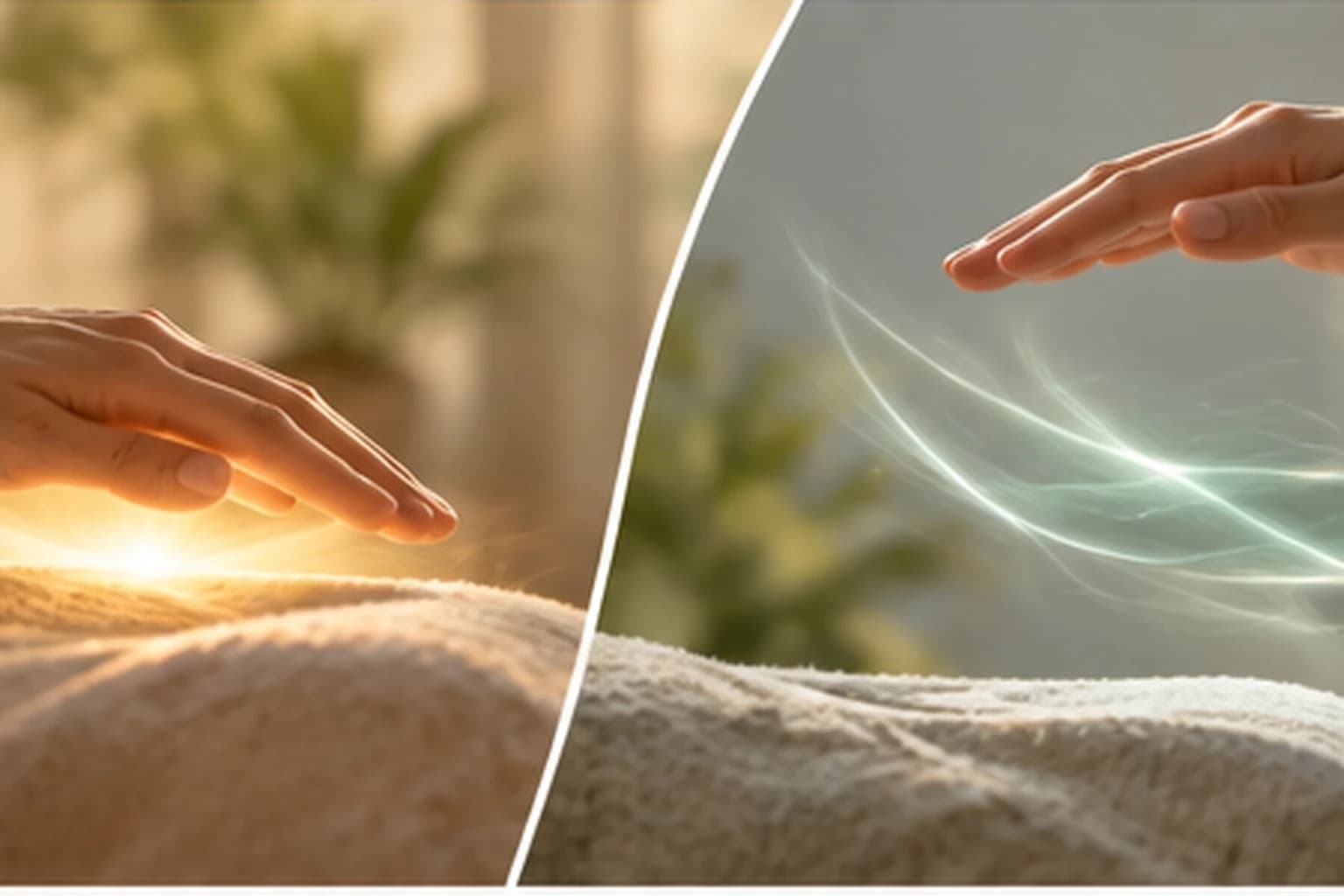
You have read about Reiki. You have read about Pranic Healing. Both talk about energy and both describe calm hands in a quiet room. Somehow you feel less sure than when you started.
The short answer is simple. The biggest difference is touch. Reiki may use light touch, while Pranic Healing never does. Below I will walk through where each practice comes from, how a session feels, what training looks like and a few gentle ways to tell which one might suit you.
Key takeaways
- Reiki uses light touch or hands held just above the body. Pranic Healing is completely no-touch.
- A Reiki session is mostly quiet and receptive. A Pranic Healing session follows clear steps. The healer scans, cleanses and then energizes.
- Both can be offered online or at a distance. Both sit alongside medical care, never in place of it.
- If you are unsure, start with what you are going through rather than the name of the practice.
Reiki and Pranic Healing side by side
| Reiki | Pranic Healing | |
|---|---|---|
| Comes from | Japan, developed by Mikao Usui in the early 1920s | Developed by Grand Master Choa Kok Sui, taught from the 1980s |
| Touch | Light touch or hands held just above the body, hands-off on request | No touch at any point |
| How a session flows | Hands rest on or above a series of places on the body | The healer scans your energy field, cleanses congested energy, then energizes |
| Online or distance | Often offered over video or as distance healing | Offered in person, over video or at a distance, sometimes with a short report afterwards |
| Training | Usually taught in levels (Level 1, Level 2 and Master) | Taught in a series of courses, with related practices such as Pranic Psychotherapy |
Where they come from
Reiki was developed in Japan by Mikao Usui in the early 1920s. The name is often translated as "universal life energy". Today there are many styles and most of them trace back to Usui's teaching.
Pranic Healing was developed by Grand Master Choa Kok Sui, who began teaching it in the 1980s. "Prana" is a Sanskrit word for life energy. The practice works with your energy body, sometimes called the aura. It also works with the chakras, the energy centres many traditions describe along the body.
The biggest practical difference is touch
If you love the comfort of gentle touch, Reiki may feel natural. Your healer rests their hands lightly on or just above different places on your body. You stay fully clothed and you can always ask for a completely hands-off session.
If you would rather not be touched at all, Pranic Healing was built that way. Your healer works with their hands a short distance from your body for the whole session. That is also why it moves so easily to video and distance sessions.
Either way, on EaseHere touch is always your choice. Every healer agrees to our Code of conduct. They ask first, offer a hands-off session and stop the moment you say so.
How each session feels
A Reiki session is mostly receptive. After a short check-in, you lie down or sit comfortably while your healer moves through a series of hand positions. There is nothing you need to do. Many people simply rest and some drift off.
A Pranic Healing session has more visible structure. Your healer first scans your energy field with their hands to sense where energy feels low or congested. Then they cleanse, sweeping away used energy. Last, they energize by directing fresh prana where it is needed. They may ask you to rest the tip of your tongue on the roof of your mouth. It is a small detail. If you have practised other energy work, it may be a new one for you.
In both practices people describe warmth, coolness, tingling, lightness, deep calm or emotion. Others notice very little. That is fine too. There is no right way to experience a session.
Training comes in levels and courses
Reiki is usually taught in levels, often called Level 1, Level 2 and Master. Pranic Healing is taught in a series of courses. Some Pranic healers also offer related practices such as Pranic Psychotherapy and Pranic Crystal Healing.
For either practice, ask your healer where and how they trained. On EaseHere, healers list their own training. When a healer shares a certificate, our team looks at it by hand and their profile shows "Trained in" that practice. We do not check certificates with schools or teachers. We will always tell you that plainly.
What science can and cannot tell you
I would rather you hear this from me than discover it later. The US National Institutes of Health says Reiki has not been clearly shown to help any health condition. It says most studies so far have been low quality with inconsistent results. It also says Reiki has not been shown to cause harm (NCCIH).
This is why we describe both practices as complementary. They sit alongside medical and mental-health care, never in place of it. Many people come to them for calm, for space to process or for a sense of being cared for. That is reason enough to explore.
So which one is right for you?
These gentle pointers may help.
- If touch comforts you, Reiki may feel like a warm place to start.
- If you prefer no touch or want a session from home, Pranic Healing is designed for that.
- If you like knowing what is happening and why, the clear steps of Pranic Healing may suit you.
- If you would rather just rest and receive, the quiet style of Reiki may suit you.
- If you genuinely do not know, start with what you are going through instead.
That last one matters most. On EaseHere you can describe what is going on in your own words and be pointed to healers who work with exactly that, whatever their practice. If you would like to go deeper first, read our guides to Reiki and Pranic Healing.
You do not have to get the choice perfect. Choose with care. Then let go and let the session be what it is.
May you find the practice and the healer that help you feel at ease.
Energy healing is a complementary practice. It is not a substitute for professional medical or mental-health advice, diagnosis, or treatment. Always talk to a qualified healthcare provider about any medical concern.
- reiki
- pranic healing
- energy healing
- choosing a healer
- beginners
When you feel ready
Every healer on EaseHere is reviewed by a real person before their profile goes live.
Browse healers